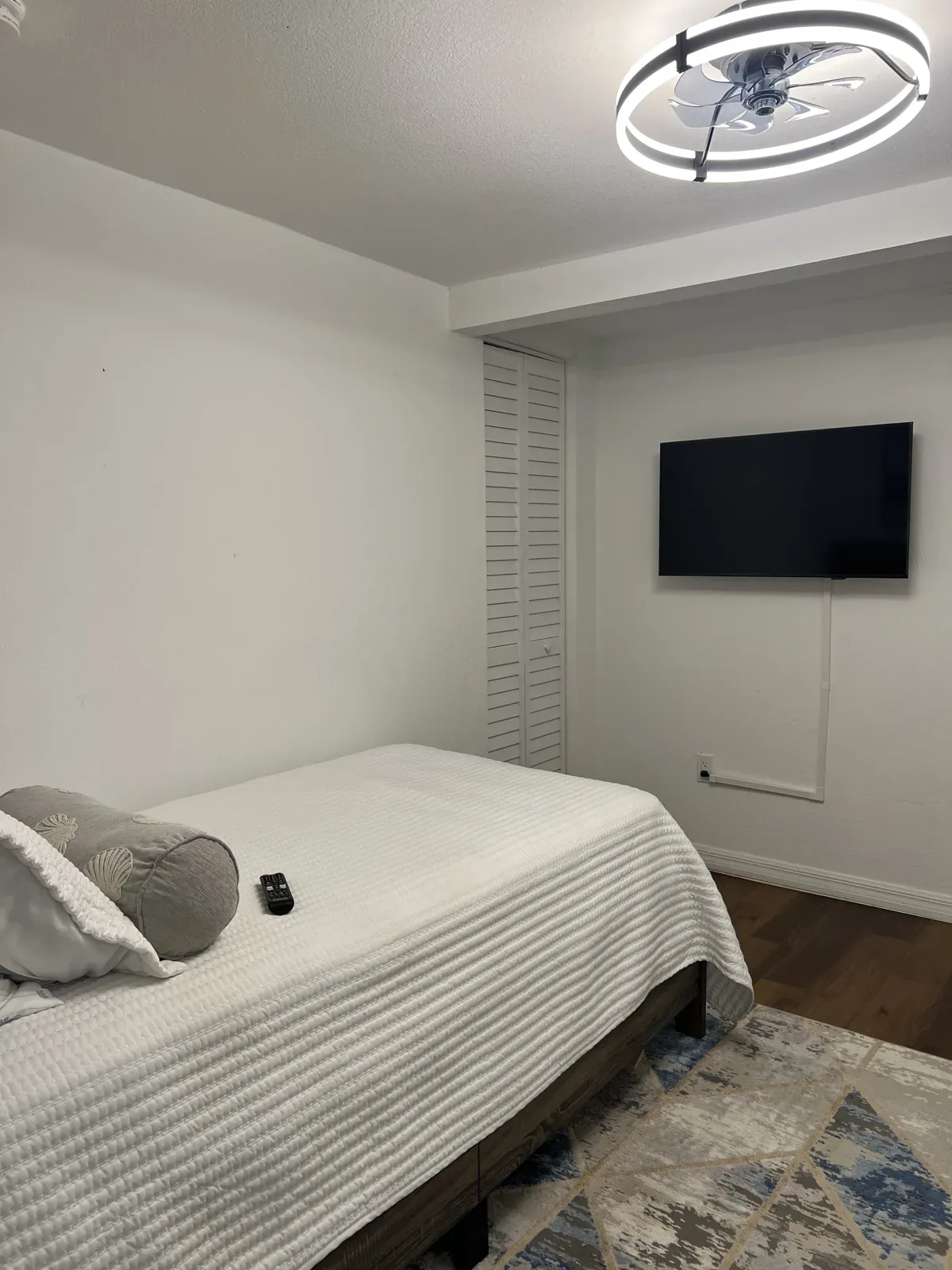
Look up at a ceiling fan that has run all summer and you will see a gray fur on the top of every blade. Turn it on and that dust goes everywhere: onto the bed, the couch, your hair. In Florida, where fans run almost all year, dust builds up faster than most people expect.
There is a quick, cheap way to clean blades that catches the dust instead of scattering it. This post shows the method, the safe way to reach a high fan, and how to handle the greasy buildup you get in a kitchen.
What this post covers:
- The pillowcase method that traps dust
- How to set up a ladder safely
- Greasy fans in the kitchen and lanai
- Cleaning the light kit and the motor housing
- How often to clean a fan
Why Fans Get So Dirty
Fan blades are flat and tilted, so they push air and also hold dust. The motion creates a small static charge that pulls fine particles onto the surface. In a room with pets, open windows, or a nearby kitchen, the layer builds fast. Dust on the blade tops is invisible from below, which is why many people forget about it until the fan starts to look fuzzy at the edges.
Before You Climb: Ladder and Power Safety
Turn the fan off at the wall switch and wait for the blades to stop. Use a sturdy step ladder, not a chair or a stack of boxes. Place it on a flat, hard surface, and open it fully so it locks. NIOSH, the federal workplace safety agency, advises keeping three points of contact on a ladder and keeping your belt buckle between the side rails so you do not overreach. See its ladder safety bulletin.
Do not carry cleaning supplies in your hands as you climb. Put a damp cloth, a pillowcase, and a dry rag in a small bucket and hang it from the ladder or use a pocket. If a fan is very high or over stairs, skip the ladder and use an extension duster instead.
The Pillowcase Method, Step by Step
- Lightly dampen the inside of an old pillowcase with a little water or a drop of mild dish soap in water. It should be damp, not wet.
- Slide the pillowcase over one blade, so the blade is inside the case.
- Hold the blade through the fabric and pull the case back toward you, wiping the dust off both sides at once. The dust stays inside the case.
- Repeat with each blade. Shake the case into a trash bag after the last one, or switch to a clean case if it is very dirty.
- Finish with a dry microfiber cloth to remove streaks.
The case catches the dust as it comes off. Dusting with a dry cloth or feather duster pushes it into the air and onto whatever is below.
Not comfortable on a ladder? Sunshine Clean & Care wipes ceiling fan blades on both sides as part of a deep clean, with light fixtures and other high spots.
A Quick Order of Operations
Do the fan before you vacuum or mop the room, because even the pillowcase method can drop a few specks. Lay a sheet or an old towel over the bed or furniture below. Clean the blades, then the light kit, then wipe the motor housing, and finish by folding the sheet inward and carrying it out. The whole job takes about ten minutes per fan once you have done it once.
Greasy Fans Over the Kitchen or Lanai
A fan near a kitchen or outdoor area gets a sticky film that dust sticks to. Wipe the blades with warm water and a drop of dish soap, working from the center to the tip. Rinse the cloth often. For heavy buildup, let a soapy cloth rest on the blade for a minute before wiping. Dry the blade after so it does not hold dust again.
If the blades are wood, check the care instructions first. Too much water can warp or stain wood. A barely damp cloth followed by a dry one is safer.
The Light Kit and the Motor Housing
While you are up there, wipe the light fixture glass and take a peek at the bulbs. Wipe the motor housing and the downrod with a damp cloth, taking care not to push water into any vents or openings. A dusty housing can hold heat and make the fan louder over time. If the fan wobbles, tighten the screws that hold each blade to its arm after the fan is off and stopped.
Common Mistakes to Avoid
- Using a dry duster alone. It flicks dust into the air. A damp pillowcase or cloth holds it.
- Soaking the blades. Too much water can warp wood blades and drip into the motor.
- Pulling on the blades. Fan blades are balanced. Pressing down hard can bend an arm and make the fan wobble. Support the blade with one hand as you wipe.
- Forgetting the pull chains. They carry oil from fingers. Wipe them with a damp cloth.
- Cleaning with the fan still moving. Always wait until it has fully stopped, and turn it off at the wall so nobody flips it on while you are up there.
If you use a long-handled fan duster with a cover, the same rule applies: the cover should be damp and you should wipe in one direction so the dust ends up in the cover, not on the floor.
How Often to Clean
For most Tampa Bay homes, once every month or two keeps dust from building up, with a quick wipe when you spot fuzz on the edges. Bedrooms and living rooms benefit most, because you spend time under them. Add the fan to the same routine as baseboards and blinds. Our guide on fall cleaning in Florida shows where fans fit in a seasonal list, and how often to deep clean gives a broader schedule.
When to Hand It Off
High fans, vaulted ceilings, and fans over stairs are not worth a fall. Sunshine Clean & Care includes ceiling fan blades in its deep cleaning service, wiped on both sides, along with light fixtures and other high spots. Mention the fans you most want done when you book, and we will plan the time.
Want the fans and high spots done for you? Call to book a deep clean and tell us which fans matter most. We will confirm what is included and plan the time.