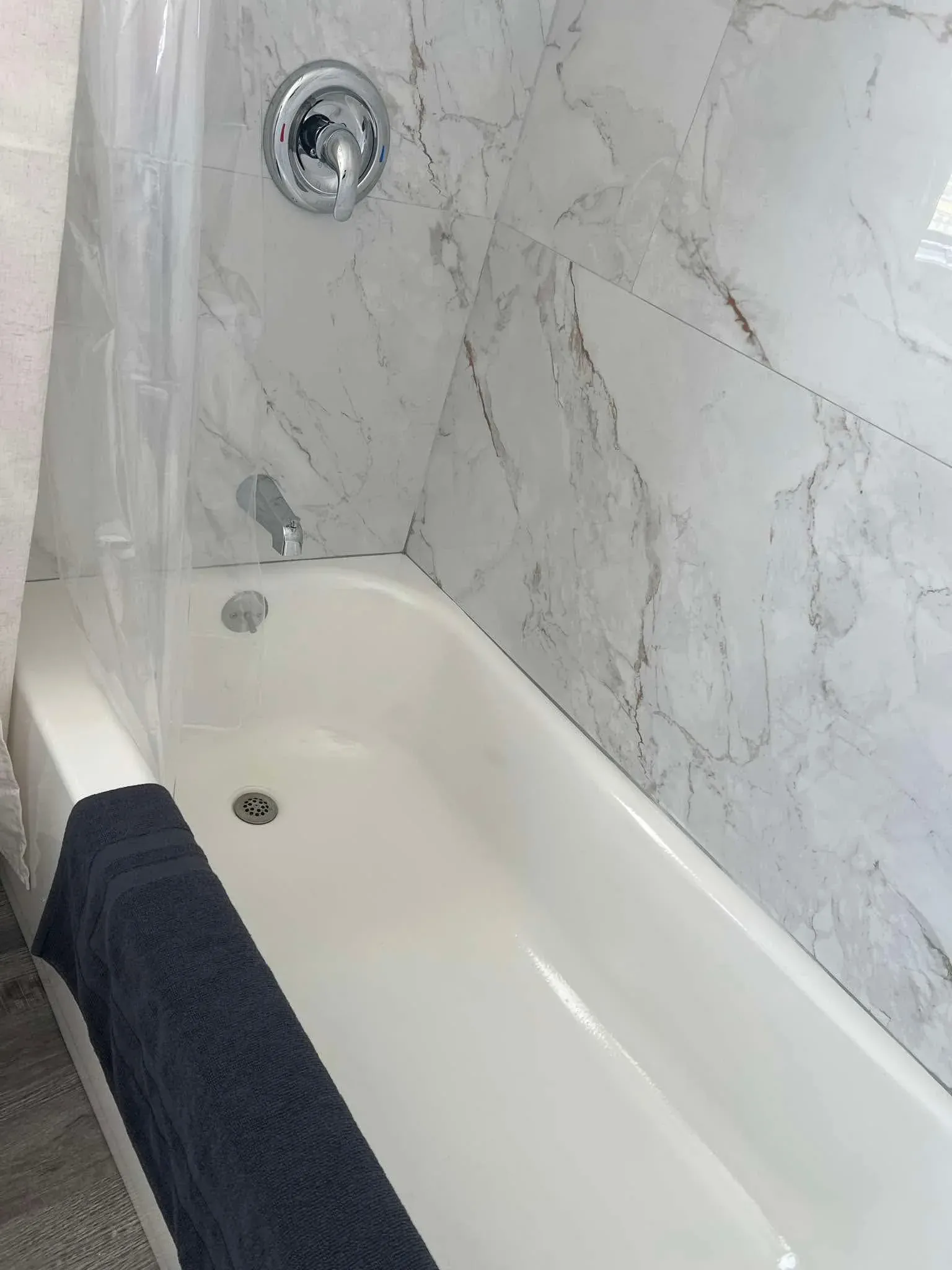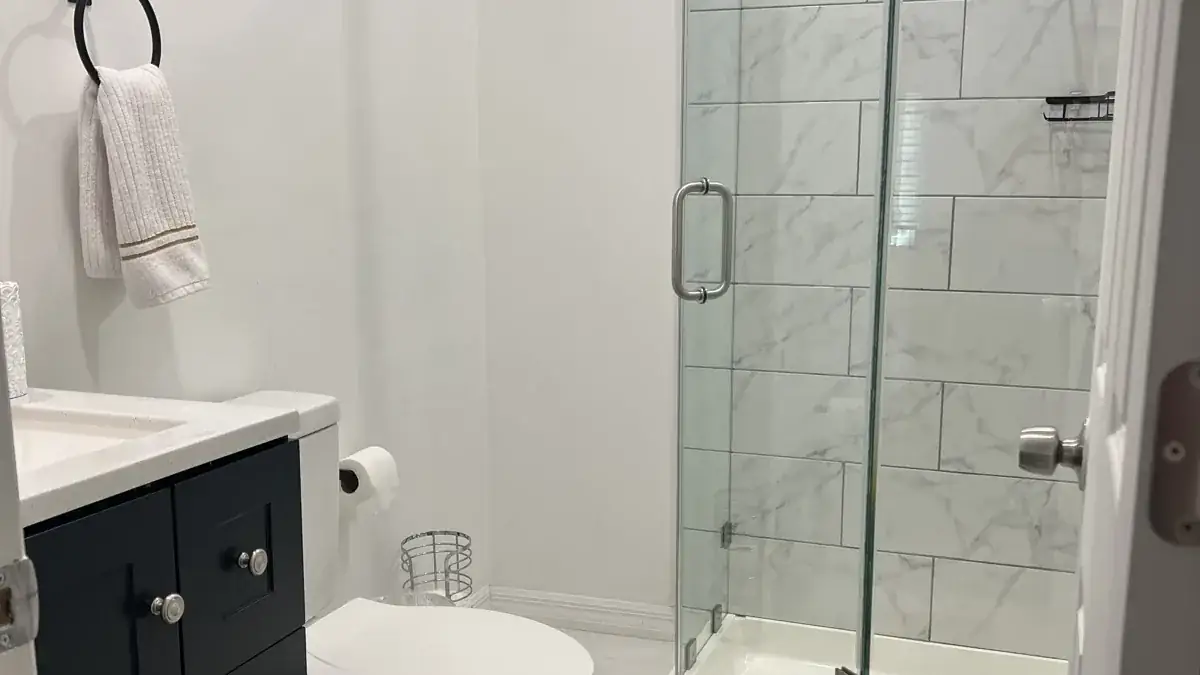
White crust on the faucet. Cloudy shower glass that will not clear. A ring in the toilet that comes back a week after you scrub it. These are hard water stains, and they are not dirt. They are minerals left behind when water dries.
Because it is minerals and not grime, ordinary soap does not lift them. You need something mildly acidic, a bit of patience, and a few habits to keep them from coming right back.
What this post covers:
- What hard water stains are and why soap does not work
- Glass, faucets, showerheads, tile, and toilets: what works on each
- What to avoid on natural stone
- A safety rule on mixing products
- How to stop the stains returning
What You Are Actually Cleaning
Hard water contains dissolved minerals, mostly calcium and magnesium. When a water drop dries, the water leaves and the minerals stay. Over days and weeks the spots turn into a white or cloudy film called scale. On glass, it looks like a haze. On chrome, it looks like crusty white edges. In a toilet, it shows as a rough, stained ring.
Because the stain is mineral, an acid dissolves it better than soap does. White vinegar is the usual gentle choice. It works slowly, so contact time matters more than scrubbing.
Shower Glass and Mirrors
Wet a cloth or paper towel with white vinegar, press it against the glass, and let it sit for ten to fifteen minutes. Wipe with a microfiber cloth, rinse with water, and squeegee dry. For stubborn film, mix a paste of baking soda and a little vinegar, rub gently with a soft sponge, and rinse. Do not use abrasive pads on glass that has a coating.
A Note on Tampa Bay Water
Hardness varies from one neighborhood to another and from one season to the next, so the same bathroom can need a different routine in different homes. If you are seeing scale on every fixture within a week of cleaning, the water is probably quite hard. A local water utility report or a simple test kit from a hardware store will show you the hardness level, and a plumber can explain softener options if you want to cut the work at the source.
Tired of fighting the same stains? Sunshine Clean & Care can add a bathroom cleaning to a visit and work through glass, fixtures, and tile. Tell us which bathrooms matter most.
Faucets and Showerheads
Wrap a vinegar-soaked cloth around the faucet base and spout, then secure it with a rubber band or tie. Leave for thirty minutes to an hour. Remove, scrub the loosened scale with an old toothbrush, and rinse. For a showerhead that is clogged with mineral buildup, fill a plastic bag with vinegar, tie it around the head so the nozzles are submerged, and leave it for an hour. Rinse by running hot water for a minute. Skip this on brass, gold-finish, or antique fixtures, which can be damaged by acid. Check the maker's care instructions first.
Tile, Grout, and Tub Surfaces
For ceramic or porcelain tile, spray vinegar mixed half and half with water, let it sit for five minutes, scrub with a non-scratch sponge, and rinse. Grout can hold minerals and soap together, so use a baking soda paste and a grout brush. Our guide on how to clean grout goes deeper.
Never use vinegar on natural stone such as marble, travertine, or limestone. Acid etches the surface and leaves dull spots that cannot be wiped away. Use a stone-safe cleaner instead.
Toilet Rings
Flush to wet the sides of the bowl, then pour in a cup or two of white vinegar and let it sit for at least an hour, or overnight if the ring is thick. Scrub with a toilet brush, paying attention to the water line. A pumice stone made for toilets can help with stubborn rings, but use it wet and gently so it does not scratch the porcelain.
When the Stain Will Not Budge
Some scale has been there for years. If vinegar does not work after a couple of tries, you may have two layers: mineral scale and a soap film on top. Wash the surface first with dish soap and water to remove the film, then repeat the vinegar soak so the acid can reach the minerals directly.
Etched glass is different. If the glass has a dull, frosted look that does not change with soaking, the surface itself has been eaten away over time. That is damage, not buildup, and cleaning will not reverse it. In that case prevention is the only fix: keep new glass dry and wipe it after each shower.
Also keep in mind that products labeled "descaler" or "lime remover" are stronger than vinegar. Follow the label, wear gloves, open a window, and never use them on natural stone, unsealed grout, or fixtures with a special finish. Test on a small hidden spot before the full job.
A Safety Rule on Mixing Products
Do not mix vinegar with bleach, and never mix bleach with ammonia or other cleaners. The CDC lists this among its top safety guidelines, because mixing can release dangerous fumes. Use one product at a time, rinse well between products, and open a window. See the CDC guidance for more. Sunshine Clean & Care does not use bleach on standard services.
Stop the Stains Coming Back
- Squeegee shower glass after each use.
- Wipe the faucet with a dry cloth after you wash up.
- Keep a spray bottle of half vinegar and half water in the bathroom for quick weekly wipes.
- If stains return fast, ask a water professional about a water softener or filter. That is a plumbing question, not a cleaning one.
Our checklist for a full bathroom deep clean shows where hard water spots fit in a larger routine.
Want clear glass and shining fixtures without the scrubbing? Call to ask about a bathroom cleaning or a full deep clean. We will go over what is included and which jobs are add-ons.