A dishwasher cleans dishes, but it does not clean itself. Food bits, grease, and soap film collect in the filter, along the door seal, and in the spray arms. Over time that causes cloudy glasses, a sour smell, and dishes that come out gritty.
The good news is that a thorough clean takes about thirty minutes and uses things you already have. Here is the order that works.
What this post covers:
- What to check first, and the supplies
- The filter, spray arms, and drain
- The door seal and edges
- A cycle to cut odor and film
- How often to repeat it
Supplies and a Quick Check
- White vinegar and baking soda
- A soft brush or old toothbrush, and a toothpick
- A microfiber cloth and a non-scratch sponge
- Your owner's manual, or its model number to look up online
The manual tells you how to remove the filter and whether your spray arms come off. Some machines are different, and the manual is the safe guide.
Step 1: Empty It and Pull the Bottom Rack
Take out all dishes and slide out the bottom rack so you can reach the floor of the tub. Look for anything stuck at the bottom, such as a bit of glass, a label, or a bone. Pick it out by hand, carefully.
Step 2: Clean the Filter
Most dishwashers have a filter at the bottom, either a cylinder you twist out or a flat screen. Remove it and rinse it under warm water. Scrub with a soft brush and a little dish soap to loosen grease. Check the holes and clear any clogs. Put it back exactly as it came out. A clogged filter is the most common reason for dirty dishes and bad smells.
Want the whole kitchen handled? Sunshine Clean & Care can add a kitchen cleaning to a visit. Tell us which jobs matter most and we will plan the time.
Step 3: Spray Arms and Drain
Look at the small holes in the spray arms. If you see white crust or food, poke it out with a toothpick. Rinse the arms, and if they pull off, soak them in a bowl of warm water and vinegar for fifteen minutes. If your water is hard, the crust may be mineral scale. See our guide on how to remove hard water stains for more help. Wipe around the drain opening and remove any gunk.
A Small Habit That Helps
Run the kitchen faucet until the water is hot before you start a cycle, so the dishwasher begins with hot water instead of cold. Scrape plates, but do not rinse them completely, and leave the door cracked open for a bit after a cycle so the inside can air out. These small habits keep the filter, seal, and spray arms cleaner between deep cleans.
Step 4: Door Seal and Edges
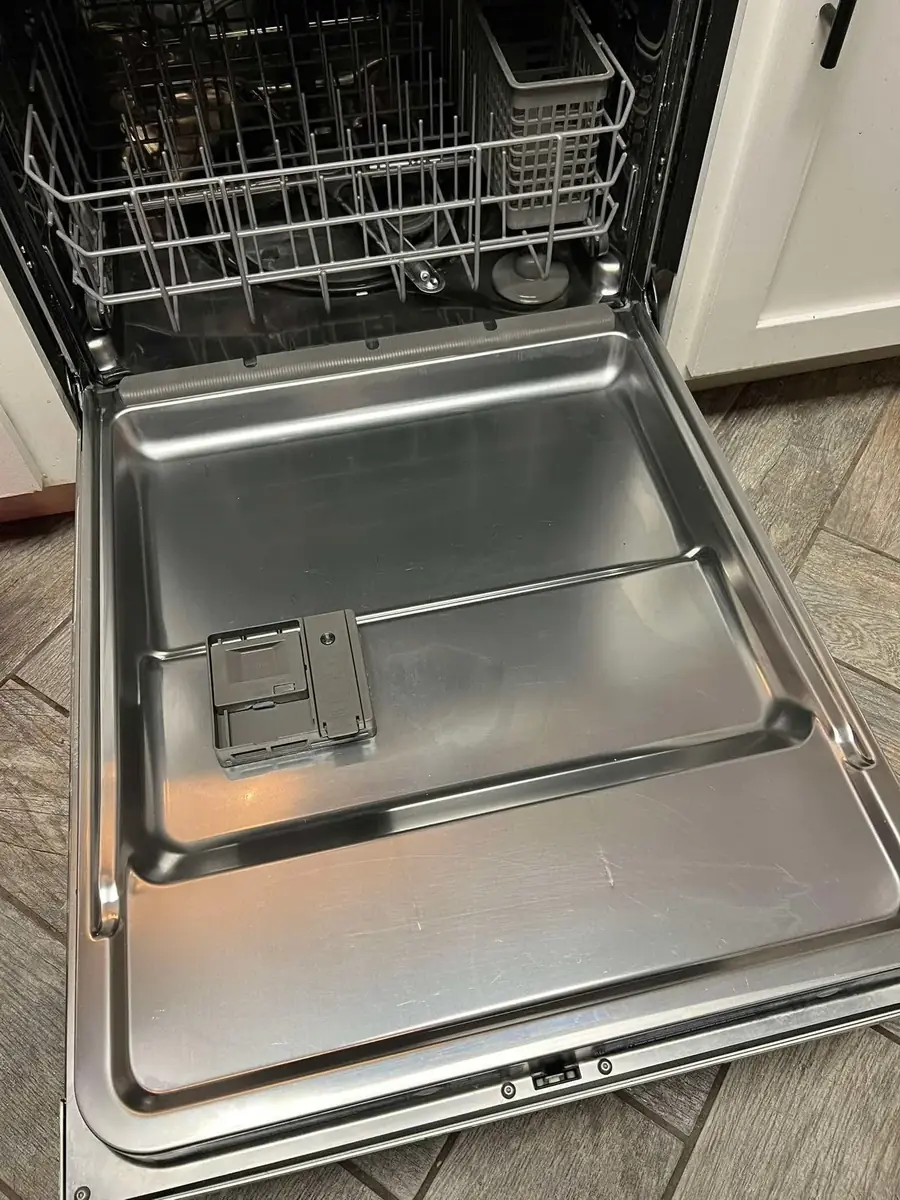
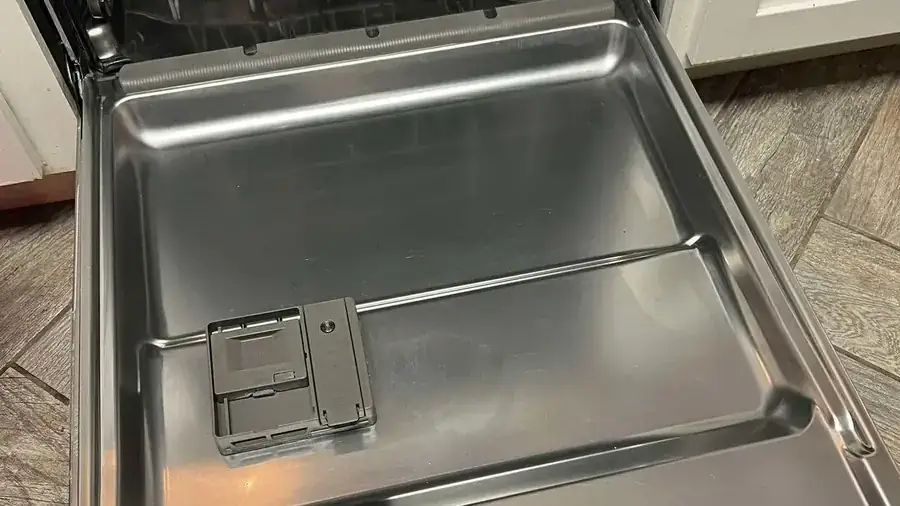
The rubber gasket around the door traps moisture and food. Wipe the full length of it with a damp cloth and a drop of dish soap, getting into the folds. Clean the inside edge of the door, the bottom of the door, and the detergent dispenser. Use a toothbrush for the corners. Then dry with a cloth so mildew does not return.
Step 5: A Cycle to Cut Odor and Film
Put a cup of white vinegar in a dishwasher-safe bowl on the top rack and run a hot cycle with the machine otherwise empty. Then sprinkle a cup of baking soda across the bottom and run a short hot cycle again. The vinegar loosens film and the baking soda helps freshen the tub.
Safety: do not mix bleach with vinegar or ammonia. The CDC warns against mixing bleach with any other cleaner. See the CDC guidance. Also, some stainless steel interiors can be damaged by bleach, so check your manual before using it.
How Often to Repeat
Rinse the filter monthly and do the full routine every two or three months. If you notice cloudy glasses or a sour smell before then, check the filter first. Scraping plates before loading, instead of rinsing fully, also helps: modern machines work better with a little food to work with, but large bits should go in the trash.
The dishwasher is one stop in a bigger job. Our kitchen deep cleaning checklist puts it in order with the oven, the refrigerator, and the sink.
Troubleshooting: What the Problem Tells You
- Cloudy glasses: often hard water film or too much detergent. Run the vinegar cycle and use a little less soap.
- Gritty dishes: a clogged filter or blocked spray arm holes. Clean both.
- A sour or musty smell: trapped food in the filter or mildew on the gasket. Clean both and leave the door slightly open to dry between uses.
- Standing water at the bottom after a cycle: a clogged drain or filter. Check the filter first, and if it persists, check the owner's manual or call a technician.
- White film on dishes: mineral scale from hard water. A rinse aid can help, along with the vinegar cycle.
If none of these steps solves the problem, the issue may be mechanical, such as a worn pump or a drain hose, and a repair technician is the right call, not more cleaning.
When to Hand It Off
If you would rather not kneel at the dishwasher, Sunshine Clean & Care can add a kitchen cleaning to a visit. We do not move heavy appliances, so we clean what can be reached safely. Read about it on the kitchen cleaning service page.
Ready for a kitchen that is clean inside and out? Call to ask about a kitchen cleaning or a full deep clean. We will go over what is included and which jobs are add-ons.