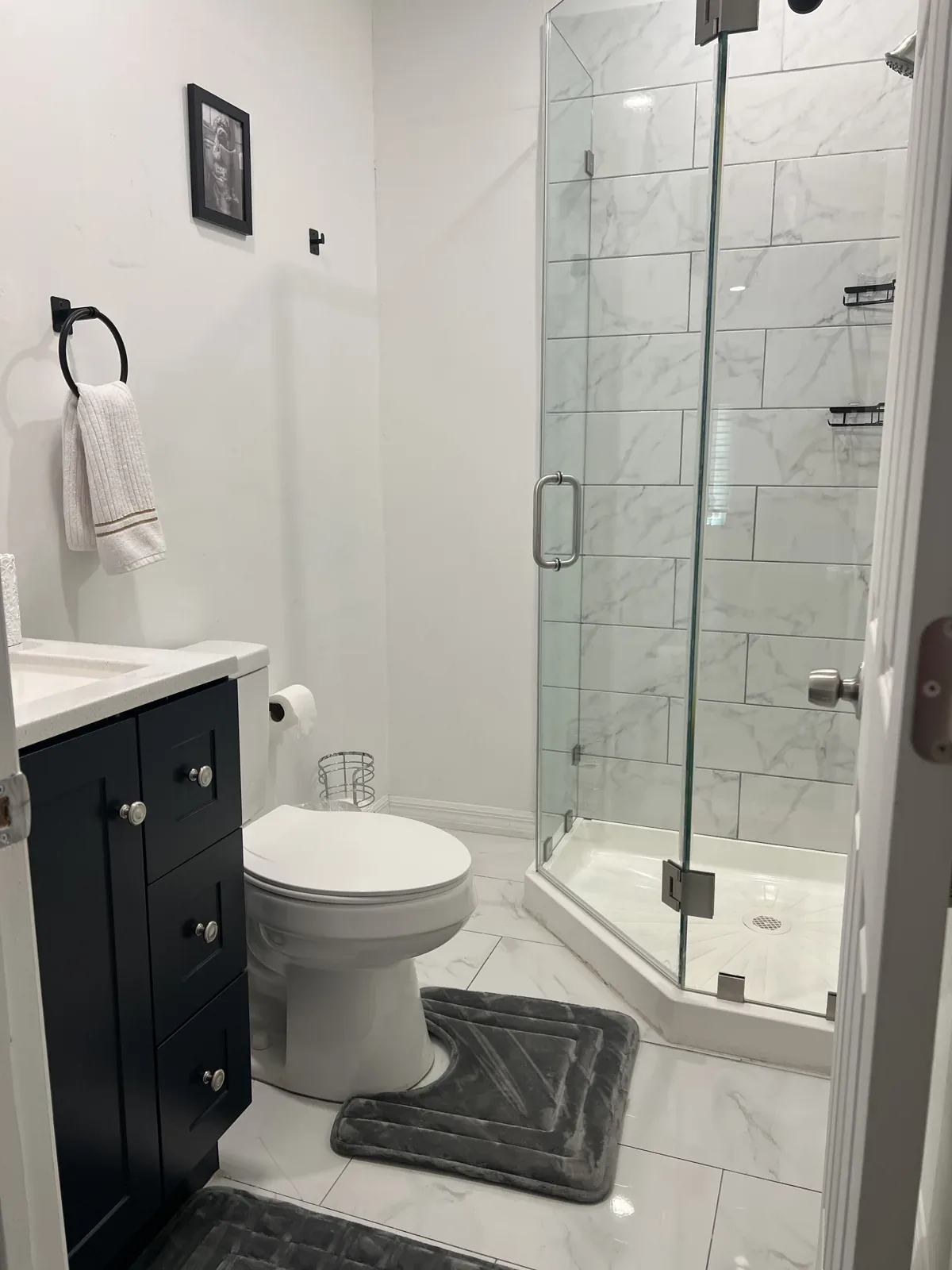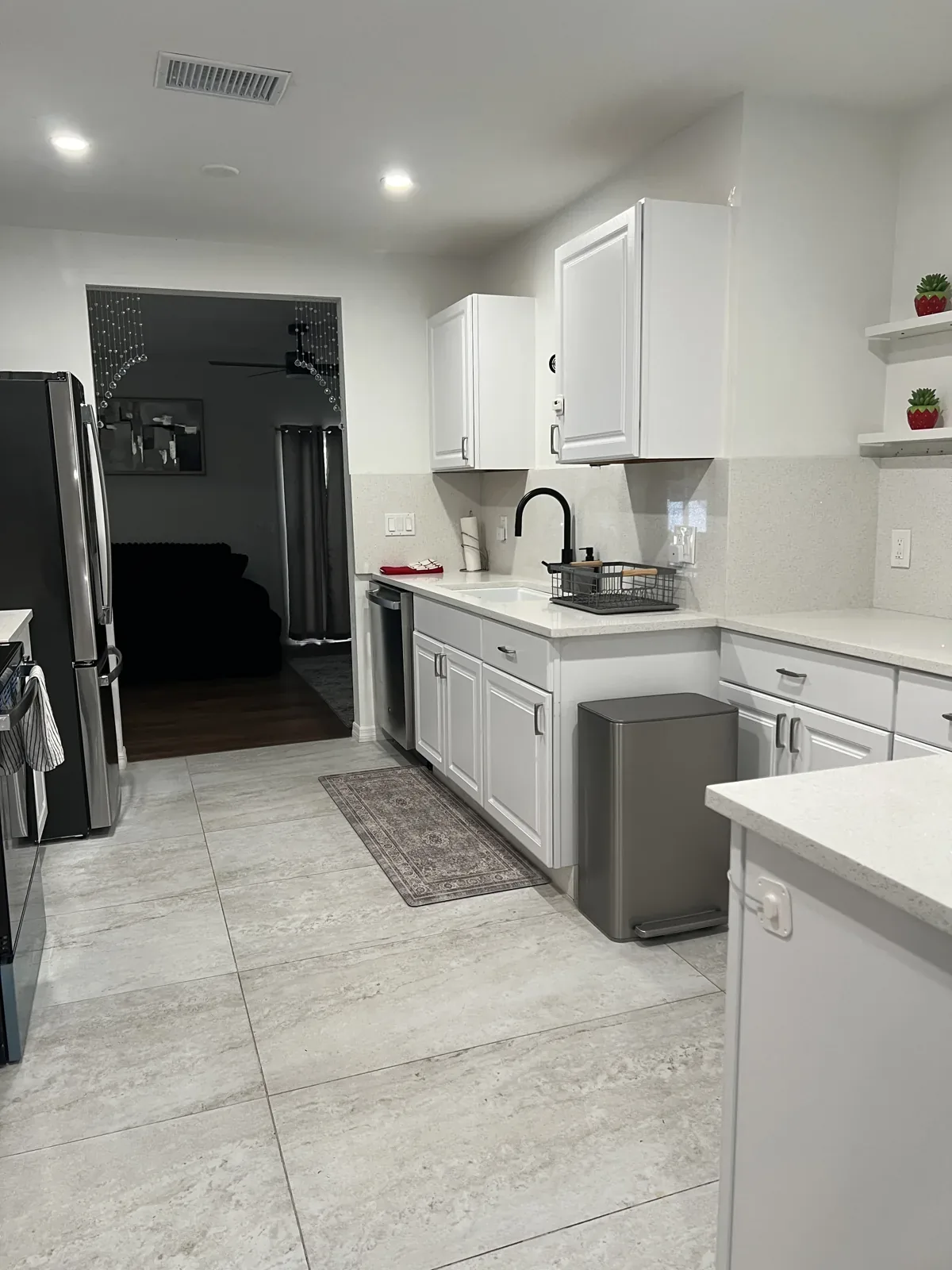
Walls collect more than most people think. Fingerprints around the switches, grease in the kitchen, scuffs along the hall, and a thin film of dust and cooking oil over everything. You do not notice it until you hang a clean picture frame and see the clean square beside the dirty wall.
Washing walls is easy to do wrong. Too much water, too much scrubbing, or the wrong cleaner can leave streaks or take the paint right off. This guide shows how to do it safely, one room at a time.
What this post covers:
- Know your paint before you start
- Gather supplies and protect the room
- Dust first, then wash top to bottom
- Grease, scuffs, and fingerprints
- Kitchen, bathroom, and Florida mildew
- Drying, touch-ups, and how often to wash
Know Your Paint Before You Start
The finish decides how hard you can scrub. Flat or matte paint is the most delicate, and glossy paint holds up best.
- Flat or matte: marks easily and shows scrub marks. Use a very light touch, or just spot-clean.
- Eggshell or satin: can handle gentle washing with a damp sponge.
- Semi-gloss or gloss: the most washable, and the usual choice for kitchens, baths, and trim.
- Old or chalky paint: if a cloth comes away with paint color on it, stop. The paint is breaking down.
Always test in a hidden spot first, like behind a door or inside a closet. If the color comes off or the sheen changes, do not continue. Also, if your home was built before 1978, read EPA's page on lead-based paint before sanding or scrubbing old, chipping paint.
Gather Supplies and Protect the Room
You do not need much, but the right tools make the difference between a clean wall and a streaky one.
- Two buckets, one for soapy water and one for rinse water
- A few drops of mild dish soap, or a gentle all-purpose cleaner
- Soft sponges or microfiber cloths. Avoid anything abrasive.
- A melamine foam sponge for scuffs, used lightly
- A soft duster or vacuum with a brush attachment
- Drop cloths or old towels for the floor and the baseboards
- A step stool, so you do not have to overreach
Move furniture away from the wall, or cover it. Tape off outlets and switch plates, or remove the covers and wash them separately.
Dust First, Then Wash Top to Bottom
Dry dust first. Wet dust turns into a smear that is hard to remove.
- Dust the walls, ceiling corners, and the tops of the trim with a duster or a vacuum brush.
- Dip a sponge in the soapy water and wring it until it is just damp.
- Start at the top of the wall and work down in sections about three feet wide. Washing from the bottom up can leave drips that are hard to remove.
- Use light, overlapping strokes. Do not scrub in circles on flat paint.
- Rinse the sponge often, and rinse the wall with a second damp sponge of clean water.
- Dry with a soft towel, especially along edges and at the bottom where water collects.
Change the water when it gets cloudy. A dirty bucket just moves the dirt around.
Want the walls washed by someone else? Sunshine Clean & Care can add wall washing to a visit. It is an add-on, so ask for it when you book and we will plan the time.
Grease, Scuffs, and Fingerprints
Some marks need more attention than the general wash.
- Fingerprints: they are skin oil. A little dish soap on a damp cloth lifts them. Focus on the area around switches and door frames.
- Scuffs: use a barely damp melamine sponge, with a very light touch. It acts like very fine sandpaper, so too much pressure removes paint.
- Grease near the stove: use warm water with dish soap, which cuts grease, and let it sit for a minute before wiping.
- Crayon and pencil: a soft eraser lifts pencil, and a little dish soap and a damp cloth lifts crayon.
- Water stains: if a stain keeps returning, it is a leak. Wash will not fix that.
If a mark will not come off, a touch-up with matching paint is better than scrubbing a hole through the finish.
Kitchen, Bathroom, and Florida Mildew
Kitchens and bathrooms are the walls that get dirty fastest. In Florida, humidity adds mildew to the list.
- In kitchens, wash the walls near the stove and behind the sink more often, since grease builds invisibly.
- In bathrooms, wipe the walls near the shower with a cloth and detergent and water, and keep the fan running to reduce moisture.
- Look for black or green spots, especially in corners and behind furniture on exterior walls.
EPA's guidance is to scrub mold off hard surfaces with detergent and water and dry them completely, and not to paint over moldy surfaces. If the spots cover a large area, or the wall is soft, treat it as a moisture problem and see EPA's mold cleanup page.
Drying, Touch-Ups, and How Often to Wash
Let the walls air dry. Open windows or run a fan, and avoid putting furniture back against damp paint, since it can stick.
- Wipe up any drips on the floor and baseboards right away.
- Touch up chipped spots with matching paint after the wall is fully dry.
- Wash high-traffic walls, such as hallways and kitchens, once or twice a year.
- Spot-clean as marks appear, so you rarely need a full wash.
Extensive wall washing is a big job, which is why it is treated as an add-on to a regular clean. If you would like help, our wall washing page explains how that works, and our baseboard guide is a good companion project. For bathroom walls that keep growing spots, read our guide to preventing bathroom mold, and see how walls fit into a deep clean.
Ready for walls that look freshly painted? Call us or send a note. Tell us which rooms and what is on the walls, and we will explain what we can do.